
Substrates
Si₃N₄ substrates: thermal conductivity ≥ 80 W/(m·K), flexural strength > 700 MPa, electrically insulating – for power electronics and semiconductors.
Si₃N₄ substrates
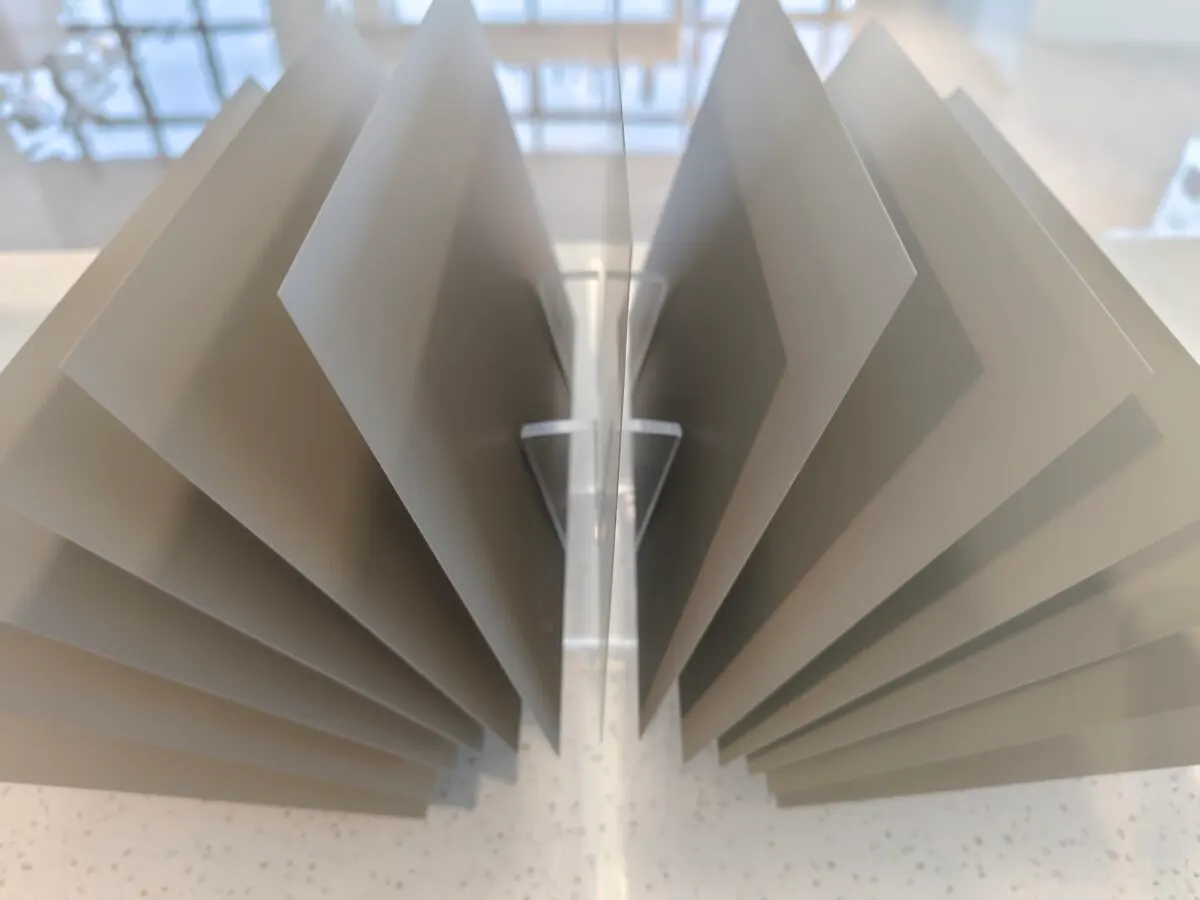
Thin, plane-parallel substrates made of silicon nitride (Si₃N₄, also Si3N4) combine high mechanical strength, very good thermal conductivity and electrical insulation. That makes them suitable for demanding thermal, mechanical and electrical environments, from power modules to semiconductor production.
Properties
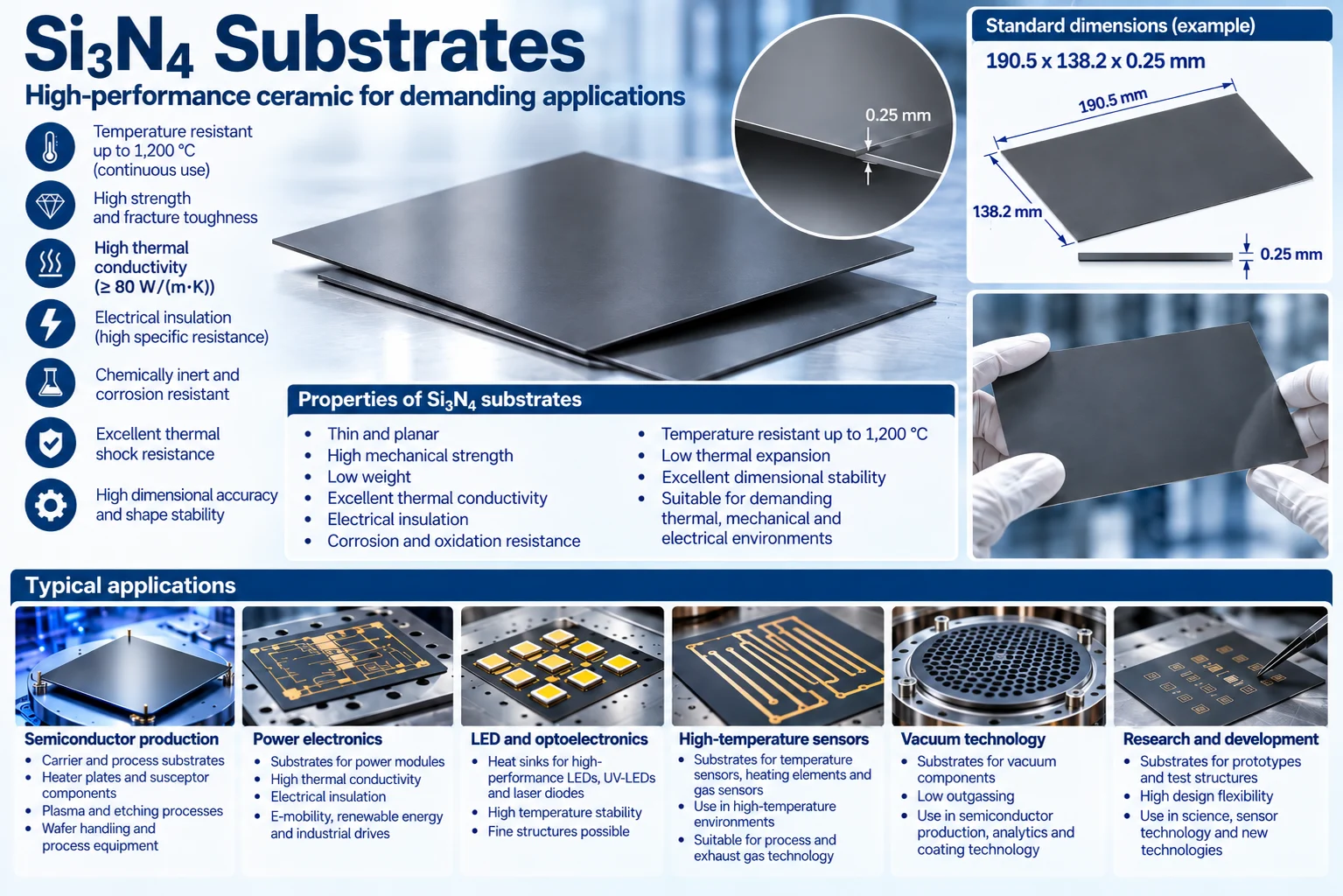
- High flexural strength (> 700 MPa) and fracture toughness
- Very good thermal conductivity (≥ 80 W/(m·K))
- Electrically insulating, high specific resistance (≥ 10¹⁴ Ω·cm)
- Low thermal expansion (2.5–2.8 × 10⁻⁶/K)
- Excellent thermal shock resistance, usable in air up to approx. 1,200–1,300 °C
- Chemically inert, corrosion- and oxidation-resistant
- High dimensional accuracy and shape stability
| Standard size | 190.5 × 138 mm (± 0.1 mm) |
|---|---|
| Thickness | 0.25 or 0.32 mm (± 0.05 mm) |
| Colour | grey |
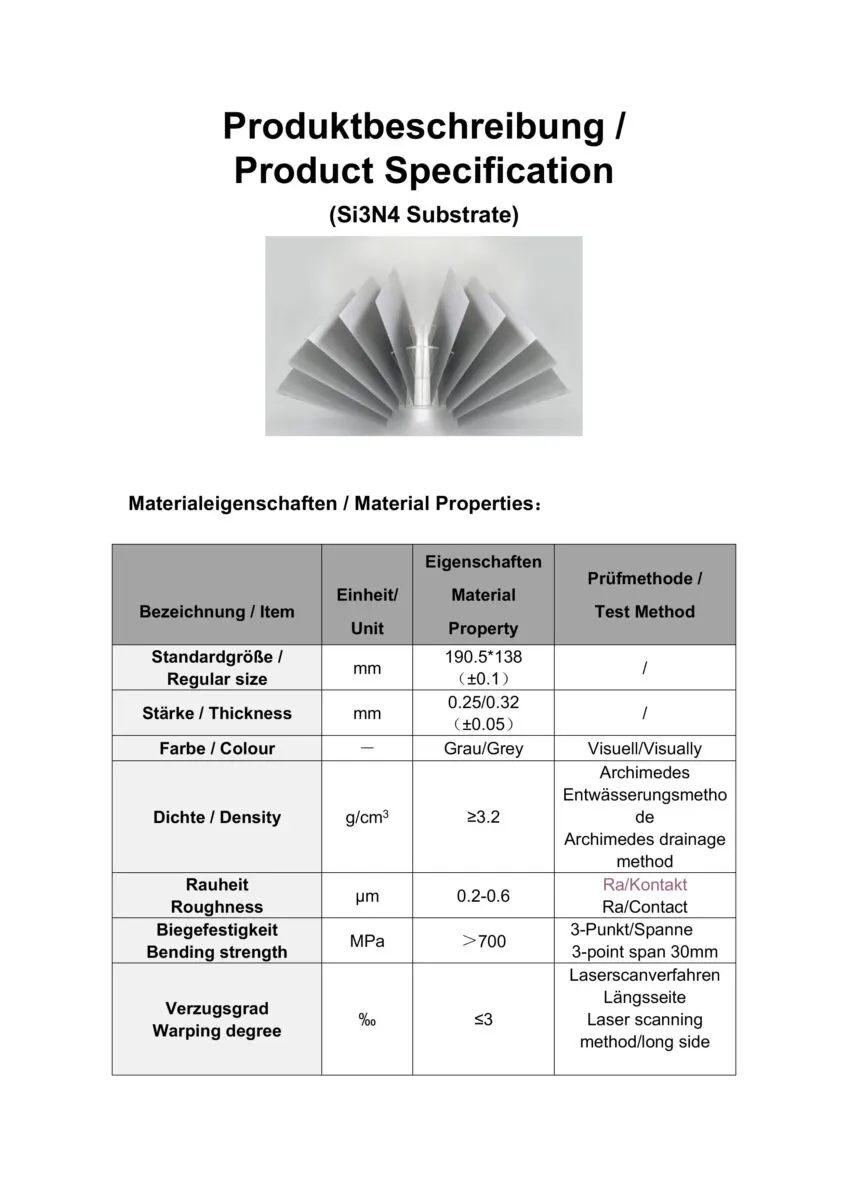
| Density | ≥ 3.2 g/cm³ |
| Roughness Ra | 0.2–0.6 µm |
| Flexural strength (3-point, 30 mm span) | > 700 MPa |
| Warping (long side) | ≤ 3 ‰ |
| Thermal conductivity | ≥ 80 W/(m·K) |
| Thermal expansion (20–400 °C) | 2.5–2.8 × 10⁻⁶/K |
| Breakdown field strength | ≥ 20 kV/mm |
| Volume resistance | ≥ 10¹⁴ Ω·cm |
| Dielectric constant (RT, 1 MHz) | 7–9 |
| Dielectric loss factor (RT, 1 MHz) | < 0.001 |
Why Si₃N₄? Compared with Al₂O₃ substrates
| Property | Si₃N₄ (silicon nitride) | Al₂O₃ (alumina, 96–99.6 %) |
|---|---|---|
| Max. service temperature in air | approx. 1,200–1,300 °C (a protective SiO₂ layer forms) | approx. 1,500–1,700 °C |
| Max. service temperature in inert gas | approx. 1,750–1,800 °C | approx. 1,700 °C |
| Thermal shock resistance | excellent, withstands extreme, rapid temperature changes | moderate to low, prone to cracking under rapid changes |
| Thermal conductivity | approx. 60–90 W/(m·K), considerably higher heat dissipation | approx. 24–30 W/(m·K) |
| Coefficient of thermal expansion | approx. 3.0–3.5 × 10⁻⁶/K, very close to silicon | approx. 6.5–8.0 × 10⁻⁶/K |
Typical literature values for orientation. MG supplies Si₃N₄ substrates; the values from the data sheet above apply to them.
Typical applications
- Semiconductor production: carrier and process substrates, heater plates, susceptors
- Power electronics: substrates for power modules, e-mobility, renewable energy
- LED and optoelectronics: heat-dissipating substrates for high-power LEDs and laser diodes
- High-temperature sensors: temperature and gas sensors, heating elements
- Vacuum technology: components with low outgassing
- Research and development: prototypes and test setups
Spellings: Si₃N₄ also Si3N4, Al₂O₃ also Al2O3, SiO₂ also SiO2.
Reduce failures, maintenance and downtime.
Let us check together whether ceramic or hybrid solutions can lower your operating costs — with individual advice instead of a datasheet overload.